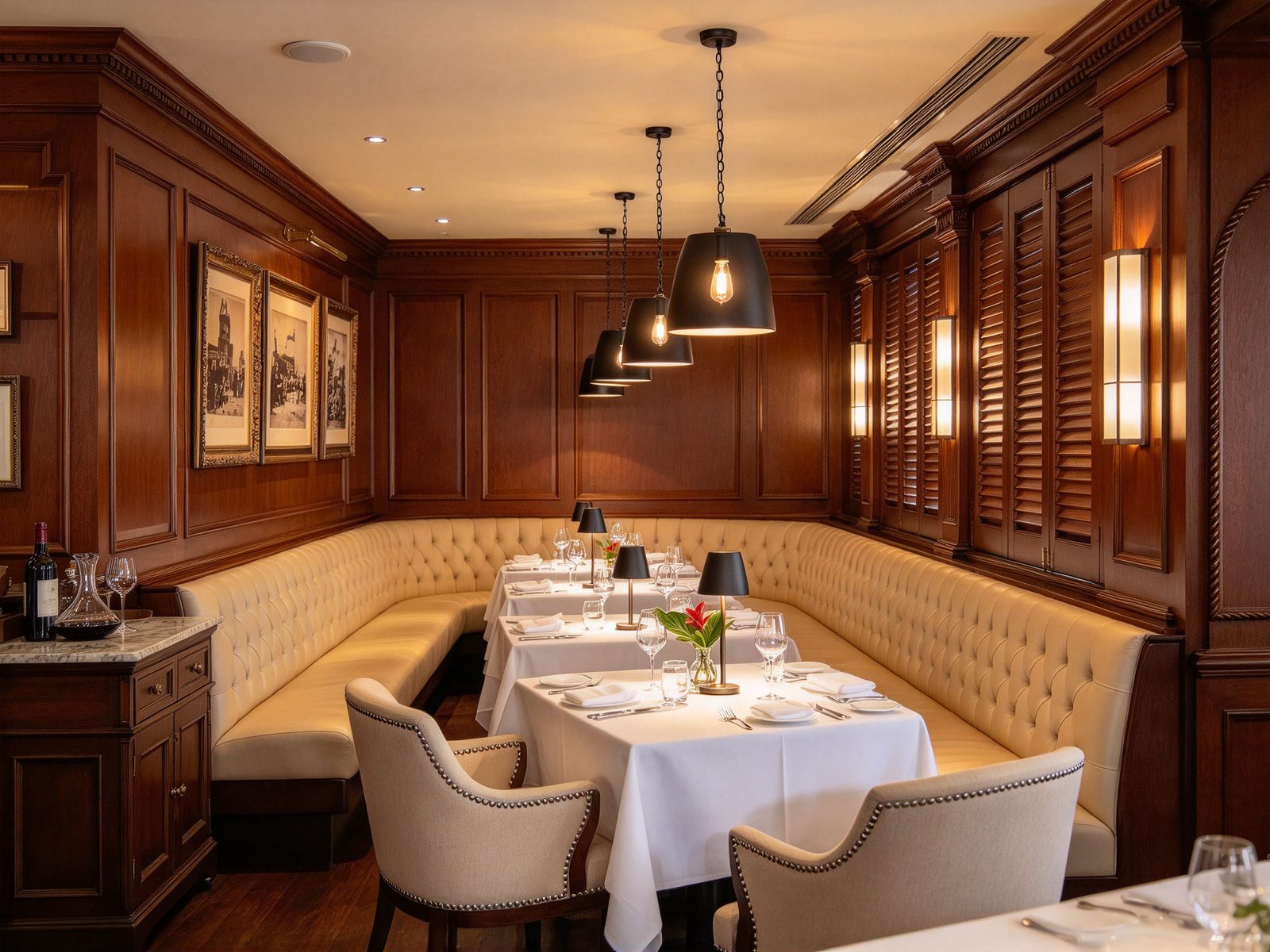
Restaurant ambient lighting is the base layer of light that sets the mood of the entire room, and it is the layer most operators never write down. Guests cannot name it, but they feel it within seconds of sitting: dim enough to relax, bright enough to read the menu, warm enough to make the food worth photographing.
Get it wrong and the room quietly burns revenue, because dwell time, table turn and guest spend all track the light. This guide gives procurement directors the numbers to put into a purchase order: lux targets by zone, the 2700K to 3000K color window, CRI minimums, dimming depth, and the fleet consistency checks that keep table three matching table thirty.
<!– wp:rank-math/toc-block /–>
What Is Restaurant Ambient Lighting Actually Responsible For?
Restaurant ambient lighting is the general illumination that fills the room between the pools of task and accent light. It carries the mood, the perceived cleanliness, and the first-impression brightness score a guest forms before the host reaches the table. Task and accent layers decorate; the ambient layer decides whether the room works.
The three layers divide the work. Ambient light comes from ceiling downlights, wall washes and shaded fixtures, and it sets the baseline. Task light is the pendant or the candle-level glow on the table itself. Accent light grazes the brick wall and lifts the artwork. A patio adds a fourth layer entirely, which our restaurant patio lighting guide covers for outdoor rooms. Fine dining rooms run all three layers low, which our fine dining table lighting guide details.
How Bright Should a Dining Room Be?
Specify lux by zone in writing, because brightness is the spec suppliers will quietly skip. A dining room that feels right at dinner runs far dimmer than a café, but it still needs readable menus and safe walkways. Use these targets as the contract numbers, then verify them with a $30 lux meter after installation:
| Zone | Target illuminance | Why it matters |
|---|---|---|
| Dining room, general | 100 to 150 lux, dimmable to about 50 | The dinner mood lives at the bottom of the dimming range |
| Table surface | 150 to 300 lux | Guests read menus and see the plate without glare |
| Bar and reception | 200 to 300 lux | Higher light signals energy and keeps drink service accurate |
| Walkways and stairs | 100 to 150 lux | Safety, and it guides the eye through the room |
| Restrooms | 150 to 200 lux | Guests judge cleanliness here first |
Two notes keep these numbers honest. Run the dimmer check at your real dinner setting, not at full output, because a room specified at 150 lux but never dimmed feels like a cafeteria. And measure after dark, because daylight from storefront glass hides every deficiency until October.
Which Color Temperature and CRI Should You Specify?
Hold the entire room inside the 2700K to 3000K window, and require CRI 90 or better on every fixture. Color temperature decides whether the room reads warm or clinical, and CRI decides whether the steak looks like the photograph. Outside this window, food turns gray and skin turns blue, and no amount of decor fixes it.
Consistency matters as much as the window itself. Lamps of the same nominal rating can drift in practice, and two lights that both claim 2700K can sit visibly apart on the color temperature scale once LED batch variation enters. Replace lamps in room-wide rounds rather than one at a time, or the mixed-batch drift appears table by table over a single season.
How Do You Keep Restaurant Ambient Lighting Consistent Across Every Table?
Batch consistency is a procurement spec, not a luck event. Fleets that ship from one production run with calibrated LEDs glow identically on table three and table thirty, which is why mixed sourcing shows. Write “one batch, calibrated 2700K, CRI 90+” into the order, and ask the supplier to confirm it in writing.
The table-level glow is the easiest layer to keep consistent, because commercial cordless lamps solve it with a sealed LED module and a rechargeable battery. A 5000 mAh hospitality unit runs 60 or more hours per charge, so the whole fleet turns over on one overnight cycle instead of drifting lamp by lamp. Our guide to rechargeable table lamps for restaurants covers the fleet logic in detail, and the charging logistics behind it are the same ones that decide the cordless vs wired table lamps question.
What Does Restaurant Ambient Lighting Cost a 40-Table Room?
Price the installed system, not the fixture sticker, because the electrician line dominates the wired route. A 40-table room with hardwired pendants and dimming racks pays for conduit, labor and permits before the first lamp lights. The cordless route moves the ambient work to the tables themselves:
| Cost item | Wired pendant route (40 tables) | Cordless ambient route (40 tables) |
|---|---|---|
| Fixtures and lamps | $3,200 to $6,400 | $2,000 to $3,600 ($50-90 each) |
| Electrical work and permits | $6,000 to $12,000 | $0 |
| Dimming controls | $800 to $2,000 | Included on-lamp |
| Charging trolley and bases | $0 | $400 to $700 |
| Typical total | $10,000 to $20,400 | $2,400 to $4,300 |
The cordless total rarely reaches half the wired total in year one, even after a battery refresh reserve. The honest exception is a room with existing dimmable pendants in good condition, where the incremental cost of better bulbs is trivial. Match the route to the room, not to the catalog.
The 7 Specs to Put in Writing Before You Order
Everything above compresses into seven lines that belong on the purchase order. Suppliers meet written specs; they quietly skip spoken ones:
- Lux targets by zone. 100 to 150 lux general, 150 to 300 lux at tables, measured after dark with a lux meter.
- Color temperature window. 2700K to 3000K across every guest-facing fixture, with no cool-white exceptions in restrooms or corridors.
- CRI 90 or better. Verified on the exact model, not the product family datasheet.
- Dimming depth. A smooth range down to 10 percent or lower, without flicker at the bottom of the range.
- Batch calibration. One production batch for the full fleet, confirmed in writing, with replacement units from the same run.
- Runtime at your brightness. 5000 mAh batteries delivering 60 or more hours at the light level the room actually uses.
- Certification and warranty. UL, CE and FCC marks for the exact model, plus a 12-month commercial warranty with stocked spare parts.
A supplier who answers all seven lines in one email is a supplier worth piloting. One who answers three and changes the subject sells lamps, not lighting systems.
Our Recommendation for US Restaurant Operators
Restaurant ambient lighting earns its budget when it is specified, measured and kept consistent, and the seven specs above make that a two-week exercise rather than a redesign. Start with a 36-unit pilot on the highest-visibility section of the dining room, run two weeks of real service, and measure with the lux meter before expanding. Operators who need US stock quickly can draw from domestic inventory with delivery in about seven days, which keeps the pilot inside one month. For volume pricing and batch guarantees, our cordless table lamps wholesale guide walks through the procurement questions to ask first.
Frequently Asked Questions
What lux level is best for restaurant ambient lighting?
Aim for 100 to 150 lux of general illumination in the dining room, dimmable to about 50 lux for dinner service, with 150 to 300 lux on table surfaces. Bars and reception run brighter at 200 to 300 lux. Measure after dark, because daylight hides every shortfall.
What color temperature should restaurant ambient lighting use?
Stay inside 2700K to 3000K for every guest-facing fixture. Warmer light flatters food and skin, while anything above 3500K reads clinical in a dining room. Specify CRI 90 or better alongside the Kelvin rating, because the two specs work together.
Are cordless table lamps part of ambient lighting?
Yes, they are the table-level layer of it. Commercial cordless lamps deliver 2700K to 3000K light at 150 to 300 lux on the table surface, add dimming per table, and keep the fleet consistent when ordered from one calibrated batch. They reduce the reliance on expensive wired pendant runs at the same time.
How much does restaurant ambient lighting cost?
A 40-table room typically lands between $2,400 and $4,300 on a cordless route including a charging trolley, against $10,000 to $20,400 for a hardwired pendant and dimming rack retrofit. Existing working infrastructure changes the math, so price the installed system before choosing.