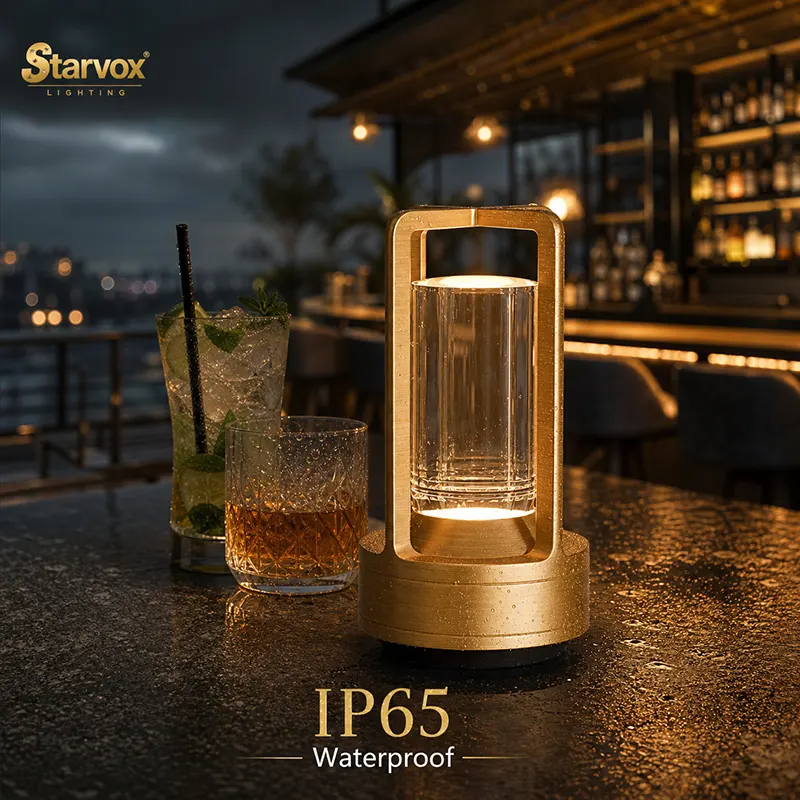
In the competitive world of hospitality and high-traffic commercial design, lighting is more than a utility—it is a cornerstone of the guest experience. However, for many restaurant owners and procurement managers, the shift toward commercial cordless table lamps has been a double-edged sword. While the freedom from cables offers unparalleled flexibility in floor planning, many venues fall into the “affordability trap,” opting for mass-produced plastic units that look promising in a catalog but fail on the floor.
The reality of a high-traffic venue is punishing. Between constant cleaning, accidental drops by guests, 12-hour operational cycles, and the heat generated by rapid charging, lighting fixtures are under immense physical and thermal stress. If you find yourself replacing your lamp inventory every six months, you aren’t just buying lighting; you’re managing a recurring expense that erodes your bottom line.
This guide explores why switching to premium metal commercial cordless table lamps is not a luxury, but a strategic financial decision for any venue looking to maximize ROI and maintain a premium brand image.
The Plastic Trap: Why Cheap Commercial Cordless Table Lamps Fail in Under 6 Months
At first glance, plastic cordless lamps seem like a smart way to stay under budget. They are lightweight, colorful, and inexpensive. However, in a B2B environment, “cheap” often translates to “fragile.” In high-traffic venues, plastic commercial cordless table lamps typically succumb to three primary points of failure, making high-quality commercial cordless table lamps a necessity for long-term use.
1. Thermal Fatigue and LED Degradation
LEDs are efficient, but they still generate heat. In a compact, cordless design, heat management is critical. Plastic (specifically ABS or Polycarbonate) is a thermal insulator. It traps heat around the LED chip and the internal battery. Since commercial cordless table lamps must manage heat efficiently to survive daily use, this thermal failure is a major drawback. Over time, this “heat soaking” causes the LED to dim prematurely (lumen depreciation) and significantly shortens the lifespan of the lithium-ion battery.
2. UV Damage and Chemical Yellowing
Commercial environments require rigorous sanitization. The combination of harsh cleaning chemicals and exposure to sunlight (in outdoor or window-side seating) causes plastic to undergo a process called photodegradation. Within months, once-white lamps turn a sickly yellow, and colored plastics become brittle, leading to hairline cracks that compromise the lamp’s internal electronics.
3. Mechanical Wear and Weight Issues
A lightweight lamp is easily tipped over. In a busy bistro or a crowded hotel lounge, a plastic lamp that weighs less than 500 grams is a liability. Every time a plastic lamp hits a hardwood or tile floor, the impact force is concentrated on the brittle housing. Unlike metal, which might suffer a minor, character-giving scuff, plastic frequently shatters or snaps at the neck, rendering the unit unrepairable.
The Metal Collection Advantage: Engineering Commercial Cordless Table Lamps for High-Traffic Longevity
When we talk about metal commercial cordless table lamps, we are referring to fixtures engineered from aircraft-grade aluminum or heavy-duty die-cast alloys. These materials aren’t chosen just for their weight; they are chosen for their physics.
Superior Thermal Management
Metal acts as a natural heat sink. By utilizing the entire body of the lamp to dissipate heat, metal fixtures keep the LED chips running cool. This ensures that the 50,000-hour rated lifespan of a high-quality LED is actually achieved in these commercial cordless table lamps, rather than being cut short by thermal throttling. Furthermore, a cooler battery environment means more charge cycles and fewer instances of battery swelling—a common safety hazard in cheap plastic alternatives.
Structural Integrity and “The Heavy Feel”
There is a psychological component to quality. When a guest adjusts a lamp at their table, the weight of a metal fixture communicates stability and value. From a practical standpoint, a weighted metal base (often 1kg or more) lowers the center of gravity, making the lamp resistant to high winds on rooftop bars and accidental bumps in high-traffic corridors, which is why stability is a key feature of metal commercial cordless table lamps.
Die-Cast Aluminum vs. ABS Plastic: A Technical Comparison for Commercial Cordless Table Lamps
To understand the long-term value, it is helpful to look at the material science. Procurement managers often compare specifications, but the housing material is where the “hidden” cost of ownership lives.
| Feature | Die-Cast Aluminum (Starvox Standard) | ABS / PC Plastic (Consumer Grade) |
|---|---|---|
| Thermal Conductivity | ~200 W/m·K (Excellent Heat Dissipation) | ~0.2 W/m·K (Thermal Insulator) |
| Impact Resistance | High (Ductile, absorbs energy) | Low (Brittle, prone to cracking) |
| UV Stability | Excellent (Powder-coated finishes) | Poor (Yellows and becomes brittle) |
| Maintenance | Refinishable / Recyclable | Disposable / Non-recyclable |
| Estimated Lifespan | 5+ Years in Commercial Use | 6–12 Months in Commercial Use |
The technical gap is clear: metal is an industrial-grade solution, while plastic is a consumer-grade compromise. For a procurement manager, the choice between these two is the choice between a one-time capital investment and a recurring maintenance headache. Ultimately, investing in high-quality commercial cordless table lamps pays off through reduced replacement costs.
Aesthetics and Brand Perception: What Your Commercial Cordless Table Lamps Say About Your Venue
In the hospitality industry, every detail is a silent brand ambassador. Lighting sits at the center of the guest’s visual field. A flickering, yellowed, or scratched plastic lamp sends a subconscious message to your clientele: We cut corners.
The “Disposable” Aesthetic
Plastic lamps often have visible mold lines and a “hollow” sound when tapped. As they age, they lose their luster. In a luxury restaurant or a high-end corporate office, these fixtures can diminish the carefully curated interior design.
The Timelessness of Metal
Metal commercial cordless table lamps can be finished in a variety of premium textures—brushed gold, matte black, or oxidized copper. These finishes don’t just look better; they age better. A high-quality powder-coated metal lamp retains its color for years, and even as it develops a patina, it maintains an “industrial chic” or “classic elegance” that plastic simply cannot replicate.
Calculating Total Cost of Ownership (TCO) for Commercial Cordless Table Lamps
The most common mistake in B2B lighting procurement is focusing on the Unit Price rather than the Cost per Operational Hour. Let’s look at a typical 3-year scenario for a 50-table restaurant.
Scenario A: The Plastic Option ($25 per unit) * Initial Investment: $1,250 * Replacement Rate: 100% every 12 months (due to breakage and battery failure) * Total 3-Year Cost: $3,750 * Hidden Costs: Labor for frequent unboxing, disposal of e-waste, and the loss of brand reputation from “broken” lamps on tables.
Scenario B: The Starvox Metal Option ($75 per unit) * Initial Investment: $3,750 * Replacement Rate: <5% (due to extreme accidental damage) * Total 3-Year Cost: ~$3,900 (Initial + minor spares) * Benefits: Zero downtime, consistent light quality, and a higher resale or “refresh” value (metal can be repainted).
By Year 4, the metal lamps have paid for themselves and continue to provide value, whereas the plastic inventory is being repurchased for the fourth time. This calculation proves the long-term performance and ROI of metal commercial cordless table lamps.
Engineering Excellence: Why Starvox Commercial Cordless Table Lamps are a One-Time Investment
At Starvox, we don’t just build lamps; we engineer lighting solutions for the most demanding environments on earth. Our commercial cordless table lamps are designed with a “metal-first” philosophy that addresses the specific pain points of B2B buyers.
Precision-Machined Aluminum Housings
We utilize high-pressure die-cast aluminum that is CNC-machined for perfect tolerances. This ensures that our IP54 and IP65 waterproof seals remain airtight, protecting the sensitive lithium-polymer batteries from the humidity and spills common in outdoor dining.
Modular Battery Systems
Unlike cheap alternatives where the battery is glued into a plastic shell, Starvox lamps feature modular internal components. If a battery eventually reaches its end-of-life after 1,000+ charges, you can replace the cell without discarding the entire metal fixture. This is the definition of sustainable, ROI-focused procurement.
Advanced Charging Technology
Our lamps are compatible with multi-unit charging trays, reducing the “charging trap” labor costs. The metal housing ensures that even when 10 units are charging simultaneously in a back-of-house station, the ambient temperature remains low, preserving the integrity of the electronics.
Conclusion: Invest in Longevity
For the modern restaurant owner or procurement director, the choice is clear. You can either treat lighting as a disposable commodity or as a durable asset. Choosing plastic commercial cordless table lamps might save a few thousand dollars in this quarter’s budget, but it will inevitably lead to higher costs, more waste, and a diluted brand image by the end of the year.
By investing in precision-engineered metal fixtures, you are ensuring that your venue stays illuminated, your guests stay impressed, and your maintenance budget stays under control. Don’t buy twice—invest in the durability and elegance of metal.
Ready to elevate your venue’s lighting? Browse the Starvox Metal Collection today or contact our procurement team for a custom quote on bulk orders for your high-traffic venue.
For a complete quality framework, see our cordless table lamp quality evaluation guide.
Further Reading: Cordless Table Lamp Quality Evaluation Guide | commercial cordless lamp collection
11 thoughts on “Don’t Buy Twice: Why Metal Commercial Cordless Table Lamps Outlast Plastic Alternatives in High-Traffic Venues”